Gov. Brown’s Pen is Busy

California State Capitol 2Governor is tearing through the stack of legislation on his desk

by Brian Leubitz

The Horseshoe is busy. Very busy. And it isn’t just the governor and his legislative staff. Those folks who post his press releases on the website must be pulling all-nighters.

If you check the Governor’s official press release page, you will see a slew of signed and vetoed legislation. And that is just a fraction of what the bills that they are actually going through. The press releases from legislators, interest groups, and the governor are generally flying fast and furious.

Perhaps to emphasize his middle of the road politics these days, the Governor has taken exactly that approach to new labor legislation. He signed legislation that will hold businesses liable for subcontractor’s labor violations, but he also vetoed a bill that would have made it harder for BigAg to stall new contracts with farm laborers. Despite the latter bill being dubbed one of the CalChamber’s top “JobKillers”, the bill made it through the Legislature. That’s usually quite the feat, but with Sen. Steinberg pushing it, shouldn’t be too much of a surprise. In his veto message, Gov. Brown says he wants to view the whole process rather than nibbling at one side or the other.

In another major piece of legislation, the governor vetoed a drone surveillance measure by Republican Asm. Jeff Gorell

Democratic Gov. Jerry Brown on Sunday vetoed a bill that would have required law enforcement agencies to obtain warrants to use drones for surveillance.

*** **** ***

The bill, AB 1327, would have required the government to secure a warrant from a judge before using surveillance drones except in cases of environmental emergencies such as oil or chemical spills. Three other states have placed a moratorium on drone use by state and local agencies. (LA Times)

Given that the bill carried substantial support from both parties in the Legislature, one would expect to see a similar bill in the next session. Although, from the Governor’s veto message, it may need to be defined on the basis of the federal and state constitutions without adding too much in the way of new privacy rights. It might be something of a threading the needle task for whomever takes up the task.

Of course, that is just the start, to get a full record keeping, you can check out the Governor’s Legislative Updates on his official press release page.


LA Times Op-Ed: No on 46 Campaign “Jaw-Droppingly Deceptive”

LA Times Editorial Board Member pens op-ed against deceptive campaign tactics by insurance funded No on 46 campaign

by Brian Leubitz

The members of the LA Times Editorial Board don’t frequently go this far out on the limb against a ballot measure campaign. But check out this op-ed from a member of that board, Jon Healey, calling out the No on 46 campaign:

Even by the political world’s low standards of truthiness, a new commercial being aired by the No on Proposition 46 campaign is jaw-droppingly deceptive.

*** **** ***

Opponents are also trying to persuade voters that the measure would expose their personal health to more prying eyes. But that is, in a word, baloney. Proposition 46 increases the risk of medical data being hacked to the same degree that building a snowman increases the risk of low temperatures. Yet a new television commercial being run by the No on 46 campaign would have you believe that the measure would practically put your medical records up on EBay.

*** **** ***

The implication is that the proposition would either create or pump more personal information into a database that’s less protected than other online repositories. None of that is true. (LA Times / Jon Healey)

I support Prop 46 for a number of reasons. The cap on non-economic damages in MICRA has been devastating for patients across the state. It makes some patients “cheaper” by emphasizing concrete economic damages like lost income. Yes, an insurance company CEO would have brought home more definable money than a child, but does that really mean that only malpractice against the rich and established should give rise to a claim? It means that killing a patient is frequently cheaper than causing expensive long-term health consequences.

Yes, Prop 46 can be a bit confusing, but it has one clear underlining goal: improving patient safety. That is what the CURES requirement would do by decreasing prescription interactions, and that is what the drug testing requirement would do. Maybe you have quibbles about the means to the end goal, but the goal is clear: patient safety.

Could CURES, the prescription database, use some work? Of course, but to blithely state that the government should not maintain any of records? Newsflash: the government already has a ton of personal data. They have your income tax records and social security records. We trust the government with that data, yet somehow hackers are going to focus their efforts on a prescription drug database?

This is California, the home of innovation. We can build a database that makes patients safer and maintains their privacy. Are we really going to shy away from all computerization of our records, or should we only trust the insurance companies with our records?

All of these objections are a way of making the issues fuzzy by the NO campaign. But Prop 46 would bring at least some semblance of hope to the families that have had to deal with the loss of a loved one to medical malpractice that things can get better. That’s why California leaders like Nancy Pelosi, Barbara Boxer and Candace Lightner, the founder of MADD, are supporting Prop 46.

I recommend you see through the typical campaign insanity and vote YES on Prop 46.

Wouldn’t Kashkari’s world be amazing?

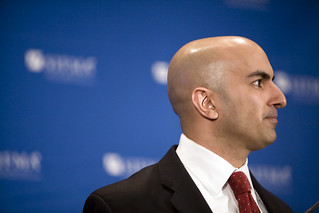
IMG_9936 copyGOP candidate for governor pictures very different GOP than actually exists

by Brian Leubitz

Neel Kashkari made a big speech this weekend at the California Republican Party’s convention. It was meant to do two things: shore up his base and project a vision of a moderate party that could face California’s future challenges. In many ways, these goals are diametrically opposed to each other.

It may have accomplished the base aspect, with convention goers seeming to be happy. Or at least they told the media that they were happy. Of course, it still wasn’t enough for Controller candidate Ashley Swearingen to be convinced:

Delegate Matt Kauble of Cerritos said he voted for Kashkari’s tea party rival, Assemblyman Tim Donnelly (R-Twin Peaks), in the June primary but was impressed by Kashkari’s passion about relieving poverty and his desire to appeal to a multiracial audience.

*** **** ***

Ashley Swearengin, running for controller, told reporters Friday that she hadn’t made up her mind between Kashkari and Brown because she hadn’t yet had a chance to meet with the Republican. State party chairman Jim Brulte labeled her strategy “Felony stupid” in an email exchange with other party members. (LA Times)

I must say, “felony stupid” is really an underused term. I think I’ll add it to my daily conversational repertoire. At any rate, base consolidation is a question best answered by FlashReport and the similar outlets. But the question of whether he, and the CRP, can speak to the broader California electorate is a different beast. So that’s where he comes up with this:

“When they said we don’t care about the poor, we don’t care about minorities, they have no idea what they’re talking about,” Kashkari said.(LA Times)

He backed all that up with historical connections, including the GOP’s support of the Civil Rights Act. And that is partially true. The civil rights legislation of the 60s and 70s wouldn’t have occured without the support of Northern Republicans. Except that most of those Republicans (see Chaffee, Lincoln) have left the GOP for the Democratic Party. And then there is the small matter of the now widely acknowledged Southern strategy.

Wouldn’t it be great if Kashkari’s vision were actually true? I would love to live in a world where there was robust debate between two parties focused on how to best ensure that no American went to bed hungry or homeless. But that world is not this one. No matter how you try to dress up the Republican party, especially the California Republican party, it is still a right-wing organization with signed contracts of inflexibility.

Maybe in another generation or so we could see two (or, preferably, more!) parties that can speak to the California electorate giving voters real options. But the CRP that Kashkari hopes to lead is not that one.

Brown Signs Ban against Spying on Consumers Using Rent-to-own Computers

Gov. Jerry Brown has signed a bill sponsored by the Consumer Federation of California to protect consumer privacy by restricting the use of spyware on rented computers.

Thanks to Assembly Bill 2667 (Richard Bloom, D-Santa Monica), consumers who rent a computer or similar electronic device in California will not fall victim to the use of invasive privacy technologies by the merchant or manufacturer who sold the item. The Assembly and state Senate each approved the bill without opposition.

“Now that our legislation is signed, rent-to-own companies will no longer be able to use spyware to collect passwords and credit card and medical records, and to activate webcams on rented devices,” said Richard Holober, executive director of the Consumer Federation of California. “Consumers in California will now be protected against this unwarranted information gathering that makes consumers more vulnerable to identity theft and other fraud.”

The need for safeguards to protect consumers against egregious privacy violations has been documented by the Federal Trade Commission (FTC). On March 10, 2014, the agency issued its Final Order Settling Charges that Aaron’s Inc. Allowed Franchisees to Spy on Consumers via Rental Computers. The FTC had previously taken action against software manufacturer DesignWare LLC and seven rent-to-own companies, including Aaron’s, on this issue.

“Keystroke logs displayed usernames and passwords for access to email accounts, social media websites, and financial institutions. Screenshots captured additional confidential details, including medical information, applications containing Social Security numbers, and bank and credit card statements. Webcams operating secretly inside computer users’ homes took photographs of computer users and anyone else within view of the camera. These included images of minor children as well as individuals not fully clothed and engaged in intimate conduct,” according to the FTC.

“When consumers contract with rent-to-own retailers for a laptop or other electronic device, they are often unaware that these devices can contain invasive software,” Assembly Member Bloom said when his bill went to the governor. “This bill protects consumers from having their personal information, including photographs, financial information and medical records, taken without their knowledge or consent.”

The rent-to-own industry is big business, with a reported $8.5 billion in revenues. The ranks of its customers more than doubled between 2003 and 2012, to 6 million. Four in 10 earn under $24,000 – part of a vast, vulnerable population whose immediate needs exceed their weekly paychecks. With AB 2667, Californians will be better protected in the privacy of their homes.

Was (Is) Six Californias a Trojan Horse?

( – promoted by Brian Leubitz)

[Even though I was planning to take a break from blogging for a while, something has been nagging me at the back of my mind about Six Californias. Since a brief email exchange I had with Mr. Draper indicates he may try again – which is why I have “Is” in the title – I decided I should post my concerns.]

According to the story of the Trojan Horse, the Greek army wanted to invade Troy but couldn’t breach Troy’s well-defended walls. So they pretended to give up, and built a giant wooden horse as an appeasement gift. The Trojans saw the Greeks sail away, leaving the wooden horse just outside the walls, so in their joy at their apparent victory the Trojans opened their gates and brought the horse inside.

Unbeknownst to the Trojans, the Greeks had left a small band of their best soldiers inside the horse. In the middle of the night, as the Trojans, exhausted from their day-long victory celebration, slept soundly, the Greeks left the horse via a trap door  and opened the gates so that the rest of the Greek army, which had sailed back, could enter Troy and take the city.

Thus the expression “Trojan Horse” refers to anything that looks attractive but has something malevolent buried inside.

(The incident also gave birth to that other expression, “Beware of Greeks bearing gifts.” However, it is not related to the expression “Never look a gift horse in the mouth“; that has a different origin.)

Attractive free software that contains malware is a modern-day example of a Trojan Horse. But so are initiatives that seem to do one thing but have something else buried inside of them.

I’m referring to Section 4 of Six Californias, that would add Section 4.5 to Article XI of the California Constitution:

SECTION 4. COUNTY AND REGIONAL POWER DURING INTERIM PERIOD OF TRANSFORMATION

Article XI of the California Constitution is amended to add section 4.5 to read:

Sec. 4.5(a) Upon enactment of this section, it shall be competent in any county charter to provide that the county governed thereunder may make and enforce all ordinances and regulations in respect to municipal affairs, subject only to restrictions and limitations provided in their several charters and in respect to other matters they shall be subject to general laws. County charters adopted pursuant to this Constitution shall supersede any existing charter, and with respect to municipal affairs shall supersede all laws inconsistent therewith.

(b) A county charter may provide for the delegation of authority in respect to municipal affairs, by way of compact, or other agreement, to a regional association of counties, consisting of the other counties within the boundaries of the new states provided for in section 2.5 of Article II, during the interim period of time before Congressional approval of the new states.

(c) For purposes of this section, any law intended by the Legislature to be a general law or matter of statewide concern that supersedes the authority of a county over its municipal affairs and also requires an annual subvention of funds to reimburse the county for the costs of the program or service pursuant to section 6 of Article XIIIB, shall require an annual transfer of funds from the state treasury to a county treasury, as needed, and in the absence of such reimbursement, the county shall have no obligation to enforce the law. The state shall have no power to incur debt owed to a county pursuant to this subdivision.

This amendment to California’s Constitution would have gone into effect if Six Californias had made it to the ballot and was passed by the voters, and would have remained in effect even if Congress never approved the division of California into six new states. I suppose one could call it the initiative’s “Plan B”, but since (as far as I can tell) most political observers expect that Congress would never approve of such a division (and Mr. Draper must know that) perhaps it is the initiative’s true “Plan A”?

I do note that the initiative is upfront about Section 4; Section 2(A)(5) even says one purpose is to “Provide interim relief to the people by empowering local government and promoting regional cooperation in recognition of the new states proposed herein.”. But note its use of the word “interim”, implying something temporary, not permanent. In some sense Section 4 is “hiding in plain sight“, and for that reason the initiative may have been a Trojan Horse.

After all, a ballot measure to establish regional governments, or at least allow for them, is pretty boring. It’d be hard to get people to sign such a petition, and it’s so wonky that it might be difficult to get people to vote for it. But a measure to divide the state six ways, now that’s sexy! That will generate buzz, and no one will notice the wonky little provision tucked into the fine print.

Note that I am not taking a position on the merits of the proposed Section 4.5 of Article XI. Perhaps it would be good for California, perhaps not. But I’m sure that, if Six Californias or a future incarnation of it appeared on the ballot, most if not all of the media attention would be given to the debate about the division into six states, and little or none would be given to the implications and lasting effects of Section 4.5 of Article XI. And that does make me suspicious of it.

–Steve Chessin

President, Californians for Electoral Reform (CfER)

www.cfer.org

The opinions expressed here are my own and not necessarily those of CfER.

Alex Padilla Will Bring Innovation and Efficiency to the SoS Office

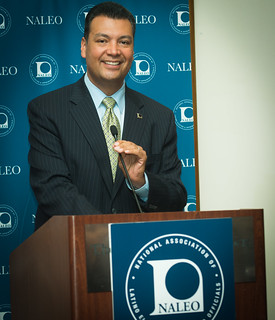
The Honorable Alex PadillaEffective legislator will bring new energy to SoS office

by Brian Leubitz

I’m not as big of a critic of Debra Bowen’s time in office as some others. To be clear, while the office could have done a better job in some areas, like Cal-Access and some other very important data tools, she has made a concerted effort to make the voting process transparent. That being said, maybe we need a different type of leader in that office now.

With the recent news that Sen. Alex Padilla was leading Republican electoral neophyte Pete Peterson by a relatively slim 43-36 lead in the recent Field Poll. Of course, name ID on both candidates is very low, and much of those numbers are due to party ID alone. Peterson has a history in the think tank world that makes him appear pretty nonpartisan. And he probably would play most issues pretty straight down the middle. But, there are a few differences, and these differences tend to come up at the most important times.

During the primary I endorsed Derek Cressman because he has a history of fighting the all-consuming power of money in politics. He had this to say of Sen. Padilla:

As a lifelong champion for campaign finance reform and open government, I am proud to support Alex Padilla for Secretary of State. Alex will bring his energy, smarts and experience to work to get things done — and he’s a champion of the reforms that will make California elections more fair and just. (Derek Cressman on Alex Padilla’s website)

I know there is a bit of hand wringing out there, especially after that poll. But Sen. Padilla will work to make our elections fair and increase transparency. As a legislator, he has looked for ways to innovate, and he will continue to do so as Sec. of State.

You can find out more about his campaign on his website here: www.padilla4sofs.com

Report #18 (and the last one) on the Six Californias Signature Verification Process

You’ve probably heard by now that Six Californias failed to qualify for the ballot. You can read about it on the SoS website temporarily here and here, and more permanently here. The official announcement that went out to the County Clerks and Registrars of Voters can be downloaded from here.

Given all that, this will be my final report on the signature qualification effort of Six Californias. It will contain more information than you will read in the media.

The last five counties reported their random sampling results in Friday’s final update: Inyo (validity rate 80.7%; they did a full count), Los Angeles (61.4%), Mariposa (67.0%), San Benito (63.1%; full count), and Trinity (66.7%). Raw counts were changed for Plumas County (an increase of 33) and Trinity (a loss of 15), for a net increase of 18 signatures, bringing the final raw count to 1,137,844 (was 1,137,826). In addition, Yuba corrected their duplicate count from 2 to 8, reducing their validity rate from 58.8% to 51.1%.

Also, the date in which Alpine County submitted their random count was corrected to August 4th (was incorrectly reported as August 14th), and the typo I reported in Report #8 in Ventura County’s random count submission date was corrected to August 15th (was July 18th, before the July 30th date when they submitted their raw count).

The overall validity rate went down to 66.15% (was 67.96%), for a projected valid signature count of 752,685, a whopping 14,550 short of what was needed to qualify for a full count. (Another way of looking at it is they had 93% of what they needed for the ballot, not the 95% needed to qualify for a full count.)

As I stated in my previous report, if Los Angeles came in under 65.7%, Six Californias would not qualify. Los Angeles came in at 61.4%, and the initiative did not.

I hope you’ve enjoyed this series. I had fun writing it. (To those of you who suggested I go into journalism, thanks, but no thanks. I’m keeping my day job.) I’ll respond to comments to this and previous diary entries as time permits, but I have no plans to do this sort of thing again, at least not until another initiative catches my interest.

I do invite you to check out Californians for Electoral Reform. We are a non-partisan (more accurately, multi-partisan) organization that does educational and advocacy work around instant runoff voting and proportional representation, as we believe these electoral reforms will result in better representation for all Californians than top-two primaries in single-member districts with independent redistricting can provide. We are an all-volunteer organization (no paid staff), so our strength is in our membership (dues are only $25/year). You might enjoy reading the answers to our questionnaire submitted by all the Secretary of State candidates prior to the June primary. Of course, you’ll be most interested in the answers of (in alphabetical order) Alex Padilla and Pete Peterson.

–Steve Chessin

President, Californians for Electoral Reform (CfER)

www.cfer.org

The opinions expressed here are my own and not necessarily those of CfER.

Report #17 on the Six Californias Signature Verification Process

Two counties reported their random sampling results in Wednesday’s update: Fresno (validity rate 75.1%) and Tuolumne (73.3%). In addition, Tuolumne (which actually did a full count, not a random sample) found an additional 29 raw signatures, bringing the total raw count up slightly to 1,137,826. The overall validity rate is up slightly to 67.96% (was 67.58%, for a projected valid signature count of 768,923, a comfortable 1,688 more than needed to qualify for a full count.

Five counties still have to complete their random sampling. They are (in order of the number of raw signatures they reported) Los Angeles (311,924 raw signatures), Mariposa (945), Trinity (779), Inyo (616), and San Benito (350). Los Angeles has to check 3% of their signatures and San Benito has to check all 350; the other three have to check 500 (unless they want to check them all).

With the Fresno and Tuolumne numbers in, Los Angeles only needs to have a not unreasonable 66.6% validity rate for Six Californias to qualify for a full count without reports from the other four counties. On the other hand, if Los Angeles has less than a 65.7% validity rate, then Six Californias will not qualify for a full count no matter what the other four counties report. This substantially narrows the range where the reports from Mariposa, Trinity, Inyo, and San Benito would matter.

Thirty-three counties had a validity rate of 66.6% or greater, while only seventeen had a validity rate less than 65.7%. We won’t know if Six Californias will qualify for a full count until Los Angeles County reports their numbers; when they do, we’ll also know if we need to get the reports from the other four counties.

–Steve Chessin

President, Californians for Electoral Reform (CfER)

www.cfer.org

The opinions expressed here are my own and not necessarily those of CfER.

Report #16 on the Six Californias Signature Verification Process

Five(!) counties reported their random sampling results Tuesday: El Dorado (validity rate 76.8%), Glenn (70.1%), Humboldt (60.3%), Lassen (65.9%), and Nevada (72.7%). In addition, El Dorado reported eight fewer signatures in their raw count than they had initially, and Nevada County reported an additional signature, bringing the total raw count down slightly to 1,137,797. The overall validity rate is up slightly to 67.58% (was 67.48%, for a projected valid signature count of 768,923, a comfortable 1,688 more than needed to qualify for a full count.

Seven counties still have to complete their random sampling. They are (in order of the number of raw signatures they reported) Los Angeles (311,924 raw signatures), Fresno (38,382), Tuolumne (4,732), Mariposa (945), Trinity (779), Inyo (616), and San Benito (350). Los Angeles and Fresno have to check 3% of their signatures, and San Benito has to check all 350; the others have to check 500 (unless they want to check them all). I hope we don’t have to wait until Friday for them all to report.

My feeling is much of it boils down to Los Angeles. While I don’t think Los Angeles by itself will put them over the number they need to qualify for a full count (for that it would have to have a remarkably high 77.0% or better validity rate), it could make it mathematically impossible for the rest of the counties to put them over. That is, if the validity rate from Los Angeles ends up less than about 62.3%, then even if the other counties had 100% valid signatures Six Californias would not qualify for a full count and would not make it to the ballot. (At this point it is mathematically impossible for Six Californias to qualify for the ballot based on random sampling alone, even if Los Angeles had a 100% projected validity rate.)

I note that only three counties had a validity rate of 77.0% or greater. On the other hand, thirteen counties had a validity rate of 62.3% or lower. It’s likely that Los Angeles will have a validity rate somewhere in between those extremes, meaning we’ll need reports from at least Fresno and Tuolumne counties, if not all of them, to learn if Six Californias will get a full count.

–Steve Chessin

President, Californians for Electoral Reform (CfER)

www.cfer.org

The opinions expressed here are my own and not necessarily those of CfER.

Report #15 on the Six Californias Signature Verification Process

Two more counties reported their random sampling results Monday: San Luis Obispo (validity rate 60.2%) and Yuba (57.2%). (San Luis Obispo County also found another raw signature, bringing the total raw count to 1,137,804.) The overall validity rate is down slightly to 67.48% (was 67.6%, for a projected valid signature count of 767,790, just 555 more than needed to qualify for a full count. (I had been rounding the overall validity rate to three significant digits, but as Six Californias is so close to the threshold I’ll begin reporting it to four significant digits as the Secretary of State does.)

Twelve counties still have to complete their random sampling, which by law they must do by Friday. They are (in order of the number of raw signatures they reported) Los Angeles (311,924 raw signatures), Fresno (38,382), El Dorado (11,649), Humboldt (7,230), Tuolumne (4,732), Nevada (4,322), Lassen (2,066), Glenn (1,910), Mariposa (945), Trinity (779), Inyo (616), and San Benito (350). Los Angeles and Fresno have to check 3% of their signatures, and San Benito has to check all 350; the others have to check 500 (unless they want to check them all).

Given how close to the threshold for a full count Six Californias is, if the smaller counties were hoping Six Californias would either qualify or fail to qualify without their numbers, so they could skip verifying signatures, they might have have to re-think that position. If I were them, and depending on how long it takes their offices to verify a signature, I wouldn’t wait until Friday morning to start verifying.

Updated September 9th: I had a typo in the raw count number in the first paragraph in the original version of this report. I had written 1,137,904 when it was 1,137,804. It is corrected above. The projected valid signature computation was made with the correct value.

–Steve Chessin

President, Californians for Electoral Reform (CfER)

www.cfer.org

The opinions expressed here are my own and not necessarily those of CfER.